Monday, April 18, 2011

Modern Witch-Hunts: India


So as you know this month I have been devoting my blog posts to talking about witch-hunts and trials throughout the world. Up until this point we have been discussing all the ones in the past. As you remember they were full of kids being tortured and killed, so called witches being blamed for the most ludicrous things and in some villages the entire women population wiped out. The saddest thing out of all of this? It isn’t something that was just that is just of the past.

One thing though that is perhaps even more sad through this is that people aren’t talking about what is going on. I mentioned this is my first post, but people just don’t get it. Witch-hunts, trials and persecution aren’t things limited to Salem or Medieval Europe as many people think. Another thing sad about this? There is hardly any press on this issue. Upon looking through articles in major magazines, newspapers and journals there are only a handful of articles that actually mention the hunts and out of those only a few that actually paint it in the light that it should be in.

While looking through these articles I found one written in 2006 in the New York Times that caught my attention the most. The thing that caught my attention was the first line of the article: “Unidentified attackers hacked to death five villagers accused of practicing witchcraft in northeastern India, officials said Tuesday” (Conroy 2006). That line is enough to make anyone stop and question what would possess this to go on. This was perhaps the only article I found that showed the actual brutality that has been going on in this area of India, for this is not the first time.

The article then goes on to talk about the past and how this is not an isolated event. These deaths are all people that have been killed over practicing sorcery in a remote part of the Assam state. At least nine in the past two weeks were killed in this area where many indigenous tribes practice witchcraft. This particular event took place in August of 2006 in the district of Kokrajhar; around 156 miles west of Gauhati, the state capital, said Mrinal Talukdar, a senior police official. Talukdar describes the event: “six men armed with machetes stormed a house... and hacked three members of a family to death late Sunday accusing them of practicing sorcery” (Conroy 2006).

Anyone that doesn’t feel horribly sick at the thought of that should really evaluate themselves. Yet these are the kind of events that are constantly being pushed under the rug or barely mentioned especially in our Western thinking society. This article though is not void of the western bias. It has a lot of the words like “alleged” and “believed” and “suspected” and not once does it ever come out and say that these people were actually witches.

Other than that the article does a great job at pointing out these horrid events that took place in these villages in August of 2006. He even brings up the ludicrous notions that these witches were killed “[when] suspicions stemmed from the recent deaths of two people in Nandipur from an unknown ailment” (Conroy 2006). So what do we see again? Sickness is being blamed on witchcraft, something that has been going on since the dawn of time.

One thing though that really stuck out was that the Indian government is actually planning on doing something to stop this which is something that we don’t see in a lot of areas in the world. "I am planning to tackle the menace by imposing a collective fine on an entire area where people accused of practicing witchcraft are hunted and killed," said the Baska district magistrate, Anwaruddin Choudhury (Conroy 2006).

Conroy then ends the article with a summary of what has happened in the past 5 years and how more than 150 people have been killed in the northeast after being accused of practicing witchcraft or sorcery (Conroy 2006). So we can see from this article that these things are still going on in the modern world. The notions of witchcraft that were alive and well back in the ancient world have kept strong and have shown themselves all around the modern world. We need more articles like this one that expose what is going on out there and that is what I am hoping to do with these blog posts. That is what the 30 Days of Advocacy against Witch-Hunts is hoping to do.

References:

Conroy, Scott. Modern-Day Witch Hunt in Remote India. GAUHATI, India, Aug. 22, 2006

Wednesday, April 13, 2011

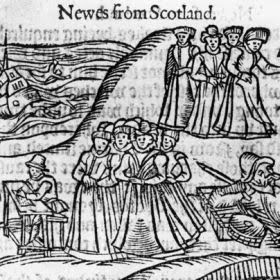
North Berwick Witch Trials in Scotland


There were many witch trials going on in Scotland, especially in the 17th century. Somewhere between 3,000 and 4,000 accused witches may have been executed in Scotland in during the period of 1560-1707. Around 2,000 of those witches were killed in the 60 years from 1620-1680. The first round of persecution occurred 30 years earlier in 1590 in North Berwick (witches.net).

This round of trials lasted two years in which 70 people were accused including Francis Stewart, 5th Earl of Bothwell on charges of high treason. After arrested, most of the “witches” were tortured and then the majority of them confessed. The key piece of information that was tortured out of these people was that they held their covens on the Auld Kirk Green, part of the modern-day North Berwick Harbor area (Ankarloo).

As absurd as it sounds, these trials were actually started by the royals who were blaming “witches” for a horrible storm they got stuck in. The way the story goes King James VI sailed to Copenhagen to marry Princess Anne, sister of Christian IV, King of Denmark. On their way back to Scotland they got caught in terrible storms and had to shelter in Norway for several weeks before continuing. The admiral of the Danish fleet that was escorting the couple blamed the storm on the wife of a high official in Copenhagen whom he had insulted before. This then caused several nobles of the Scottish court to be implicated, and witchcraft trials were held in both countries (Ankarloo).

After that whole ordeal over a hundred suspected witches in North Berwick were arrested. During the torture I had mentioned earlier, many confessed to having met with the Devil in the church at night, and devoted themselves to doing evil. These evil things they did included poisoning the King and other members of his household, and attempting to sink the King's ship (Ankarloo).

The most famous story perhaps of this trial was of Agnes Sampson who was examined by James VI at his palace called Holyrood House. She was fastened to the wall of her cell by a witch's bridle. A witch’s bridle was an iron instrument that had 4 sharp prongs that were forced into the mouth, so that two prongs pressed against the tongue, and the two others against the cheeks. She was kept constantly awake by a rope that was placed around her neck so that if she nodded off she would end up strangling herself. It was only after these torturous ordeals did Agnes Sampson confess to the fifty-three indictments against her. She was then finally executed by being strangled and then burned (Ankarloo).

References

www.witches.net

Ankarloo, B., Clark, S. & Monter, E. W. () Witchcraft and Magic in Europe.

Image is artist's rendering of the North Berwick Trials, courtesy of Itscotland.org.uk

Monday, April 11, 2011

Ancient Widespread Witch Persecution

Ancient Mesopotamia wasn’t the only area where witchcraft was both prevalent and opposed to. There were many areas throughout Africa, Europe and Asia where witchcraft found its way into society and in the process got a (excuse the slang) bad rep. Most religions at this time were very opposed to the notions of witchcraft (well what they presumed were the practices and purposes anyways) and thus anyone caught using magic, witchcraft or any other type of sorcery were persecuted.

Perhaps the greatest examples of persecution were the Ancient Romans. Now there have been stories of the Roman Empire persecuting anyone and everyone they could get their hands on. I mean even the Judea-Christian bible talks about Christians and Jews being persecuted for their beliefs. So it’s safe to say the Romans didn’t really like anyone who was different (which is the basis to most witch-hunts).

In Ancient Rome it was strictly against their religious practices to engage in any type of “other-worldly” activities (which in itself is a question of what that really entails). This included any use of magic such as sorcery or witchcraft. They had very strict rules concerning this and if anyone was caught doing any spells or practicing any kind of magic they were arrested. The people were also taught to keep a vigilant eye out for anyone breaking these rules. If one saw someone practicing and didn’t report them they were held to the same laws as those practicing. It was thought that they were enabling them if they didn’t report them. The punishment for either crimes involved arrest, then extensive torture and lastly execution (witches.net).

On the other spectrum there were ancients that actually embraced witchcraft and it became part of their everyday life. Ancient Egypt was one such place. There witches were considered wise and would help their “clients” by using their knowledge of magic to contort the cosmos to alter events and such. They used various tools to do this including amulets, special formulas, amulets and figures (witches.net).

Another area where witches had clients that they tended to was Ancient Greece. These people were considered to be part of a lower form of magic called mageia which was close to sorcery. These people were the ones who claimed to have knowledge and powers to help their clients and harm their clients’ enemies by performing rites or supplying certain formulas (witches.net). The reason I say claimed is because many were fakes that were looking for quick money (which one could relate to the fake palm readers and phone psychics of modern days).

The other form of magic was of a much higher caliber and was even considered by many to be whole religion within itself. It was called Theurgy and was thought to be a very high and powerful form of magic, superior to mageia and many other magic practices at these times in history all around the world (witches.net).

So it is easy to see that the ideas of witchcraft were spread all around the world at this time (well where we have records of them). Not all of them were persecuted at this time in history since in many places the notions of the “supernatural,” witchcraft and sorcery was accepted. Though like any other period in time we did have the tyrants like the Romans who pioneered mass witch-hunts.

References

www.witches.net

Image of the painting of the Greek witch Erichtho at the British Museum.

Friday, April 8, 2011

Laurel History Museum


Okay, so taking a short break from the witchcraft series (don't worry we'll resume on Monday) to give you all a little information on what I've been up to at the museum. So many of you know that I volunteer at the Laurel History Museum in Laurel, Maryland. I work with the collections there doing anything from updating databases, organizing photographs, handling artifacts and currently sorting through newspapers.

So the project that I'm working on now is quite awesome. What we're doing is going through these stacks of old Laurel Leaders (local newspaper) from 1897 - 1910. We're carefully looking through them to see if there are any interesting news bits, obituaries or ads that would be cool to display in the museum. Needless to say we've found quite alot, including the photo above which is of an old Winchester Rifle ad out of a paper from 1908.

In addition have found multiple headlines that caught our eye like "Man arrested for assassination attempt on Roosevelt" in 1910. For me the obituaries were in fact the most fascinating. My favorite: "Man found in field with four bullet holes in his side and a gun laying next to him. According to police he had been there for quite sometimes until two young boys found him. Upon investigation it was ruled that he committed suicide." - Laurel Leader 1905.
Now I know that CSI and all that jazz wasn't around back then, but come on! I mean does that sounds like a suicide to any of you?

These are the kinds of things that I get to handle when I'm at the museum and I can't tell you all how much I love it! From a young age I always wanted to be behind the scenes to be able to handle the history and to create exhibits for others to see. At Penn State I got that opportunity at the Matson Museum of Anthropology and now I get to here at the Laurel Museum. One day I hope to be working for the Museum of the American Indian (Part of the Smithsonian) which any of you who know anything about me should know it's my dream job.

I'm happy that I can share this information with all my followers who I know share a lot of the same passions that I do. Thanks for the support you guys!

Thursday, April 7, 2011

Ancient Notions of Witchcraft


The whole concept of the persecution and trials of witches isn’t limited to the European witch trials that span from the 13th to 21st century (yes they are still going on). This notion of witches being of supernatural origins and in league with the devil actually stems from the very cradle of civilization itself: Ancient Mesopotamia.

There are many ancient accounts of these so called witches especially both in Sumeria and Babylon. It was thought back then that there were evil spirits and demons that inhabited the earth and each person was supposed to have their own spirit to help protect them. They also had to use their own skills to eradicate these spirits such as incantations, protective amulets and even exorcisms. These notions though were thought to be perpetuated by the use of witchcraft and sorcery and the protecting methods were thought to be dark magic (witches.net).

There shortly became laws set up against these practices that laid out the punishments for the accused. Most honestly make no sense at all to me. Take this law that appeared in one of the first law documents written in the 1800s BCE, The Code of Hammurabi:

If a man has put a spell upon another man and it is not justified, he upon whom the spell is laid shall go to the holy river; into the holy river shall he plunge. If the holy river overcome him and he is drowned, the man who put the spell upon him shall take possession of his house. If the holy river declares him innocent and he remains unharmed the man who laid the spell shall be put to death. He that plunged into the river shall take possession of the house of him who laid the spell upon him (Hammurabi).

So basically what this passage is saying is that as long as the person was justified in their spell work then they remained unpunished, but then the person who had the spell cast on them is dead, drowned in the river. It would be really interesting to see how many of these people survived the rivers and how many didn’t.

Like many other places in the world there were many different groups in Ancient Mesopotamia that had their own ideas on what witchcraft was and if it was indeed a punishable act. Since I am a big studier of mythologies I would be remise if I didn’t mention that use of witchcraft and sorcery in the first known story ever written: The Epic of Gilgamesh. Now one thing that many people don’t know is that there are many different accounts of this tale some even being rooted in actual historic context (for example using the actual king Gilgamesh) and some that add on to the basic story. I’m partial to the original version of Gilgamesh that has the whole epic told in 12 “books (Gilgamesh).

The character in Gilgamesh who practices sorcery and witchcraft is Shamhat. She is constantly referred in the epic a the “harlot Shamhat.” Shamhat is the one who took care of both Gilgamesh and Enkidu when they were in the pine forest, providing them with food, shelter and clothing. Still at one point Enkidu lashes out against Shamhat for her nature being that of sorcery (Gilgamesh).

Also the metamorphosis of Enkidu into a wolf-like creature was also supposed to be linked to witchcraft. The idea that him putting on the cloak from Shamhat and then “shifting” into this animal is rooted deep in the notions of werewolves and other shape-shifters that are results of witchcraft (Gilgamesh). In fact in some parts of the world werewolves and witches became synonymous (To learn more about werewolves see my older post on the Pre-Modern Werewolf).

These ancients notions where they were mostly outlandish and in some cases were void of rational thought, there were many a peoples who believed in them. In fact many of the practices against witchcraft and punishment for the accused come from these ancient concepts. For example the passage from the Code of Hammurabi greatly influenced punishing the accused during the Salem Witch Trials.

References

www.witches.net

The Code of Hammurabi. English translated version, 1800 BCE

Gilgamesh. Oxford World’s Classic English translation, 1989 CE

Photo of Relief of Gilgamesh on the side of a temple from livius.org

Tuesday, April 5, 2011

Germanic Witch Trials


Moving along we travel to Western Europe and to Germany where perhaps some of the most well known of the European Witch Trials happened. Germany was actually a little late when it came to the witch-hunts. The whole concept first appeared around the 14th Century in southern France and Switzerland. Germany however didn’t have any trials until the first major persecution in Europe, when witches were caught, tried, convicted, and burned under the lordship of Wiesensteig in southwestern Germany. This was recorded in 1563 in a pamphlet called "True and Horrifying Deeds of 63 Witches" (Wolfgang 2004).

Wiesensteig wasn’t the only one who was known for widespread persecution of witches as well as many other practices and religions in the area. Johann von Schönenberg, appointed archbishop of the independent diocese of Trier, was also one of the brutal leaders of persecution during this time. Schönenberg was known for his support of the Jesuits on which he built a college to showcase his support. He started weeding out the Protestants, Jews and then witchcraft. It was these three that he labeled as the stereotypes for “nonconformity” in Germany He was the one who spearheaded the massacres of Trier which is said to be “of an importance quite unique in the history of witchcraft” (sacred-texts.com).

During the period between 1587 and 1593 no one was outside the reach of Schönenberg. Those persecuted were of men and women, all ages and all social standings, including those who even held high positions within the administration of the villages. All together 368 people were burned alive for practicing witchcraft and sorcery in twenty-two different villages. In 1588, there were even two villages were left with only one female inhabitant in each (sacred-texts.com).

It wasn’t only the ones who were accused of actually practicing that were persecuted. Many people were persecuted for showing sympathy for the accused and especially for helping them in any way. Perhaps the most famous account of this is Dietrich Flade. Flade was a rector of the university and chief judge of the electoral court. He was among the few that hated the use of torture and treated the accused with much milder than the other proponents of this movement. It was because of this that he was tortured, strangled and then burnt at the stake. This was all to send a message to all the other people like him who wanted to turn the witch trials into mild wrist slapping (sacred-texts.com).

All of the persecution and executions was severely shrinking the population of the area. On the flip side the executioners themselves flourished economically and were treated like royalty. They were described in one account as “a nobleman of the court, dressed in silver and gold, while his wife vied with noblewomen in dress and luxury” (scared-text.com).

Things started to die down though after awhile and the main reason was due to the economy. The peoples (even some nobility) the people grew impoverished and rules were made and enforced restricting the fees and costs of examinations and examiners. So suddenly the funds were cut off for these executioners and parishioners and all the zeal and determination withered away (Wolfgang 2004).

That didn’t mean that the witch-hunts were over with. In fact in 1703 another famous with trial took place in the town of Fuersteneck, near Grafenau in Bavaria. The Fuersteneck Trial surrounded the accusations against Afra Dickh who was a serving girl at the Frueth farm in Wittersitt (which is a part of the modern-day parish of Ringelai). Afra was accused of poisoning both humans and animals as well as the “bedevilment” of them. She was also accused of associating with other witches as well as the devil himself. Two of the other witches that Afra was accused of associated with were Maria a 13 year old shepherdess, who was also in service at the same farm and the widowed farmer Maria Kölbl, a mother of 15 from nearby Neidberg.

The following is an account of the execution of Afra Dickh:

On account of magic and arsony (in puncto veneficii et incendii), Afra Dickh was, on the 1st of June 1703, hanged by executioner Sebastian Fleischmann of Passau at the place of execution in Fürsteneck near Perlesreut and afterward burnt to ashes at the stake, with 30 blocks of wood and 40 pounds of pitch (Praxl 1982).

These are just some of the accounts of went on in Germany during this time. Many more were accused and executed in accordance with laws at the time. Once again we see proponents that are scared of the unknown and the apparent corruption of others persecuted those they felt were threatening their regimes.

References:

Paul Praxl: Die Geschichte des Wolfsteiner Landes, in: Der Landkreis Freyung Grafenau, S. 178, Freyung 1982

http://www.sacred-texts.com/pag/twp/twp05.htm

Behringer, Wolfgang. Witches and Witch Hunts: A Global History. Malden Massachusetts: Polity Press, 2004.

Image of the Trier Trials from the Pamphlett of 1563